

10 Surprising Benefits of Video Games Backed by Science

For decades, video games have been blamed for poor grades and antisocial behavior. But a growing body of scientific research tells a very different story. When played in moderation, video games sharpen the mind, strengthen social bonds, and even improve mental health. Here is what the science actually says.
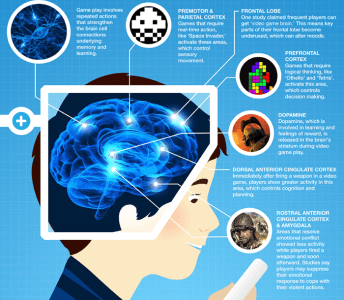
Benefits of video games backed by science
Quick Stats
| Stat | Number |
|---|---|
| Gamers worldwide | 3 Billion+ |
| Boost in problem-solving | 23% |
| Gamers who play with friends | 70% |
| Stress reduction after gaming | 40% |
Table of Contents
- Boosts Cognitive Skills
- Improves Problem-Solving
- Strengthens Social Skills
- Reduces Stress and Anxiety
- Enhances Hand-Eye Coordination
- Sparks Creativity
- Sharpens Memory
- Accelerates Learning
- Improves Focus and Attention
- Builds Career Skills
1. Video Games Boost Cognitive Skills
[IMAGE: Brain activity / cognitive focus — 820x400px] Alt text: Video games boost cognitive skills and brain function
Research from the University of Rochester found that action video games dramatically improve players’ ability to process visual information. Gamers develop better spatial reasoning, faster reaction times, and stronger multitasking abilities compared to non-gamers.
Strategy games like StarCraft require players to manage multiple objectives simultaneously, leading to significant improvements in cognitive flexibility — the brain’s ability to switch between tasks quickly and efficiently.
“Action video game players show enhancements in fundamental perceptual and attentional abilities that translate to improved performance in real-world tasks.” — Daphne Bavelier, University of Rochester
2. Improves Problem-Solving and Strategic Thinking
Games like The Legend of Zelda, Portal, and chess-based titles place players in complex scenarios requiring creative, multi-step solutions. A long-term study published in PLOS ONE found that teenagers who played strategy games scored significantly higher on problem-solving tests.
The iterative nature of gaming — try, fail, adapt, succeed — mirrors real-world critical thinking. Players learn to analyze patterns, test hypotheses, and pivot strategies rapidly, building a mental toolkit that extends far beyond the screen.
[IMAGE: Person thinking strategically / chess or strategy game — 820x400px] Alt text: Video games improve strategic thinking and problem solving
3. Strengthens Social Skills and Builds Communities
[IMAGE: Friends gaming together / multiplayer session — 820x400px] Alt text: Multiplayer gaming strengthens social skills and friendships
Contrary to the “antisocial gamer” stereotype, 70% of gamers play with friends — either in person or online. Multiplayer games require constant communication, coordination, and teamwork, all of which transfer directly to real-life social situations.
Online gaming communities provide a sense of belonging, especially for introverted individuals. Games like Minecraft and Fortnite have become modern social spaces where millions forge lasting friendships across borders.
- Multiplayer games teach real-time negotiation and diplomacy
- Guild and team structures mirror workplace dynamics
- Voice chat and forums develop communication confidence
4. Reduces Stress and Relieves Anxiety
A study by the American Psychological Association found that playing casual video games is one of the most effective immediate stress-relief tools available. Games provide a safe environment to experience challenge and accomplishment without real-world consequences.
The state of “flow” — deep, immersive focus described by psychologist Mihaly Csikszentmihalyi — is easily achieved through gaming. This mental state is linked to reduced cortisol levels, improved mood, and a genuine sense of accomplishment.
Casual gaming for just 20 minutes reduces stress and negative mood more effectively than sitting quietly, according to research published in Frontiers in Psychology.
[IMAGE: Relaxed person gaming at home — 820x400px] Alt text: Video games reduce stress and anxiety
5. Enhances Hand-Eye Coordination
Surgeons who play video games make 37% fewer mistakes during laparoscopic surgery, according to a study published in the Archives of Surgery. The precise, rapid hand movements required in fast-paced games directly train fine motor skills and spatial coordination.
This benefit extends to sports, music, and any field requiring precise physical coordination. Studies consistently show gamers outperform non-gamers on fine motor control tasks, even those entirely unrelated to gaming.
6. Sparks Creativity and Imagination
[IMAGE: Minecraft or creative game screenshot — 820x400px] Alt text: Video games spark creativity and imagination in players
Games like Minecraft, Dreams, and Roblox are infinite creative sandboxes. A study by Michigan State University found a direct correlation between gaming and creativity in children — regardless of race, gender, or genre played.
Many professional architects, game developers, and designers credit childhood gaming as a key spark for their creative careers.
7. Sharpens Memory and Spatial Navigation
A study from the University of California found that playing 3D video games improves hippocampal memory — the brain region responsible for forming and storing new memories. Participants showed a 12% improvement in memory tests over just two weeks of regular play.
Navigating complex game worlds exercises the brain’s spatial memory systems, similar to how exploring new environments builds real-world navigation skills.
8. Accelerates Learning Through Gamification
[IMAGE: Educational game / student learning — 820x400px] Alt text: Gamification accelerates learning and knowledge retention
Apps like Duolingo use game mechanics — points, streaks, levels — to make language learning addictive. Studies show gamified learners retain information 40% longer than traditional learners.
Simulations like Kerbal Space Program teach orbital mechanics and physics. Civilization teaches history and geopolitics. Game-based learning is not a shortcut — it is a smarter path to lasting knowledge.
9. Improves Focus and Sustained Attention
Contrary to fears that games shorten attention spans, research suggests the opposite for action gamers. Fast-paced games demand sustained concentration and train players to filter irrelevant information — a skill called selective attention.
Children with ADHD have shown measurable improvements in focus and impulse control through carefully selected therapeutic games, with researchers exploring gaming as a non-pharmaceutical treatment option.
10. Builds Real Career Skills
[IMAGE: Esports team / professional gamer — 820x400px] Alt text: Video games build real career and professional skills
The gaming industry is a $200+ billion global economy. But the skills developed through gaming transfer to virtually every profession:
- Leadership — managing raid teams and guilds
- Resource management — strategy and simulation games
- Resilience — repeated challenge and failure builds persistence
- Data analysis — competitive gaming statistics and performance tracking
Fortune 500 companies have begun recognizing competitive gaming achievements on resumes, understanding that top-ranked players demonstrate elite strategic thinking and performance under pressure.
The Verdict: Play Smart, Play Often
Science is clear — video games, when played mindfully, are a powerful tool for cognitive development, social connection, and mental wellness. The key is balance, intention, and choosing games aligned with your goals.
Did you find this article helpful? Share it with a fellow gamer!
Meta Description (للـ SEO plugin مثل Yoast): Discover 10 science-backed benefits of video games including improved cognitive skills, problem-solving, social connections, and mental health. Learn how gaming can be good for you.